Giant Panda vs Grizzly Bear: How Do They Compare?
They're both bears. That's where most of the similarities end. One eats bamboo for 16 hours a day and has its own international fan club. The other catches salmon out of waterfalls and could bench press a motorcycle. Let's break this down properly.
Size and Weight
Adult male giant pandas weigh between 190 and 275 pounds. Females run smaller, typically 155 to 220 pounds. They stand about 2 to 3 feet tall at the shoulder and measure 4 to 6 feet from nose to tail.
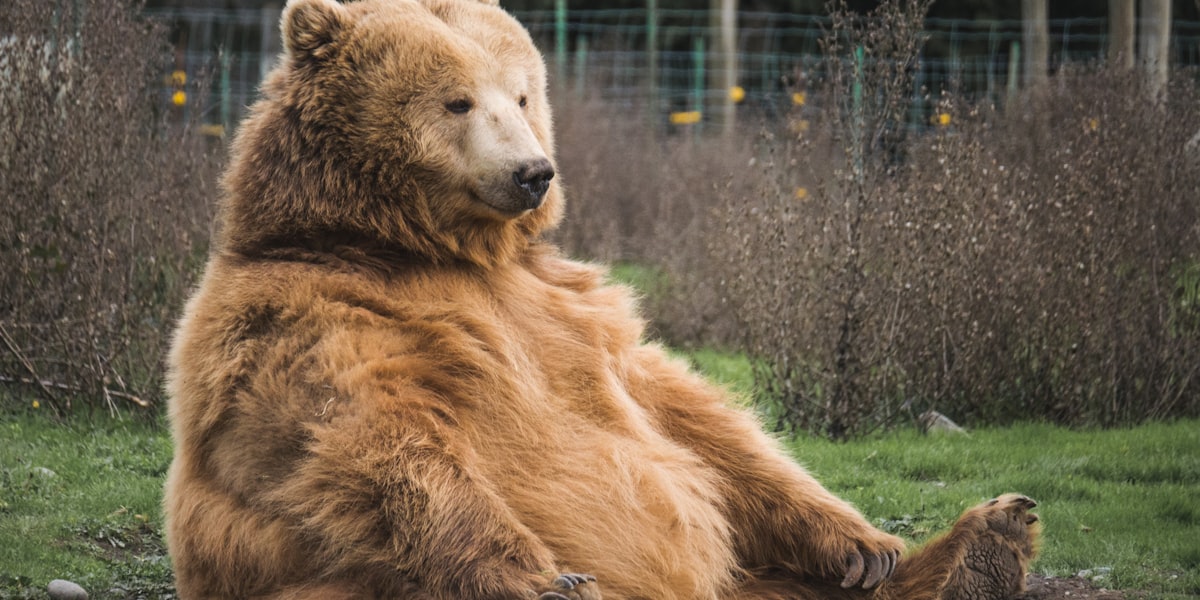
Grizzly bears make pandas look like stuffed animals. Males average 400 to 790 pounds, though coastal grizzlies near salmon rivers regularly hit 900+. The record was a Kodiak bear at 1,656 pounds. They stand 3.5 feet at the shoulder on all fours and over 8 feet when standing upright.
In raw size, it's not even close. The grizzly wins by a factor of three.
Diet: The Fundamental Split
Here's where things get wild. Both species are classified as Carnivora -- the order of meat-eating mammals. Giant pandas said "no thanks" about 2 million years ago and switched to a nearly exclusive bamboo diet. They still have a carnivore's short intestine, which means they digest bamboo terribly. Only about 17% of what they eat gets absorbed. That's why they eat SO MUCH.
Grizzlies are true omnivores. Salmon, berries, roots, insects, elk calves, ground squirrels -- they eat whatever is available and whatever they can catch. Before hibernation, a grizzly can consume 20,000 calories per day to pack on fat. A panda eats roughly 3,800 calories of bamboo. Different energy strategies for different lives.
Bite Force
This is where pandas surprise people. A giant panda's bite force measures around 292 pounds per square inch. That's stronger than most predators their size, because their jaw muscles are built to crush bamboo stalks that can be as hard as softwood lumber.
Grizzly bears clock in around 975 PSI. That's enough to crush a bowling ball. But pound for pound, the panda's jaw strength relative to body size is genuinely impressive. They chose peace but kept the hardware.
Habitat
Giant pandas live in temperate broadleaf and mixed forests in central China, between 5,000 and 10,000 feet elevation. Cool, misty, bamboo-dense mountain terrain in Sichuan, Shaanxi, and Gansu provinces. Their total range covers roughly 5,400 square miles.
Grizzlies roam across western North America -- from Alaska and the Yukon through British Columbia, Montana, Wyoming, and small populations in Washington and Idaho. A single male grizzly's home range can cover 600 square miles. The entire wild panda population lives in less space than a few grizzly families.
Conservation Status
Giant pandas: Vulnerable (downgraded from Endangered in 2016). About 1,864 in the wild. The population is slowly increasing thanks to massive Chinese government investment in habitat protection and breeding programs. If you want the full story, check out why pandas are endangered.
Grizzly bears: Least Concern globally, though specific populations vary. North America has about 55,000 grizzlies, with the majority in Alaska and western Canada. Lower 48 populations in Yellowstone and the Northern Cascades are still recovering from near-extinction in the 1900s.
Could a Panda Beat a Grizzly?
No. Not a chance. Let's be honest. A grizzly outweighs a panda by 3-4x, has longer claws, faster sprint speed (35 mph vs the panda's 20), and is built for combat. Pandas aren't fighters. They're bamboo monks who opted out of the arms race.
But could a grizzly survive on bamboo? Also no. A grizzly would starve trying to extract enough calories from bamboo with its digestive system. The panda's low-energy lifestyle is a genuine survival strategy -- just not one that involves winning fights.
Obsessed with panda facts? Browse our full collection of wild panda facts or grab some panda merch to show your appreciation.
Explore Panda Facts